

CYRKIL ROBOTICS
Machines shaped by motion. Engineered through iteration.
We explore physical robotic systems through product form, fabrication, integration and responsible validation.
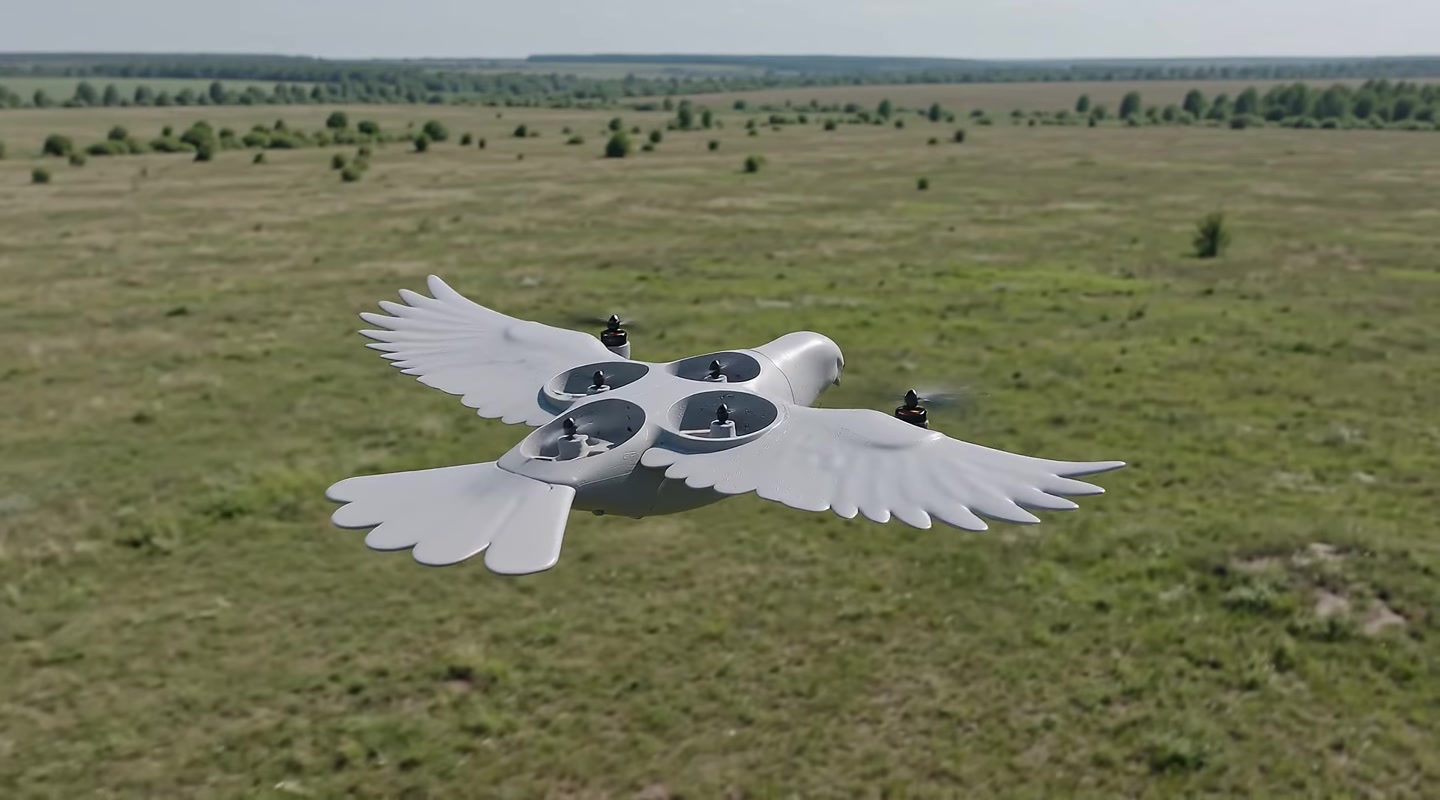
DOVE progresses from fabrication and assembly to an aerial simulation over open terrain.
Two machines · Two missions
Two environments. One disciplined engineering direction.
DOVE explores an aerial form inspired by natural mobility. The Agricultural Robot explores ground-based assistance for field environments. Both are presented honestly as development concepts and prototypes.
01 · DOVE
An aerial form developed through fabrication, integration and flight exploration.
DOVE brings a bird-inspired silhouette together with a four-duct aerial architecture. The work shown here documents a prototype journey rather than a published performance specification.
- Mobility-inspired form
- Lightweight architecture exploration
- Iterative prototype integration
Manufacturing sequence
From printed form to internal integration.
The numbered frames follow the supplied development order. The final image shows integration in progress; the product film completes the visual story with the assembled aerial form.
Swipe or scroll to follow the sequence.
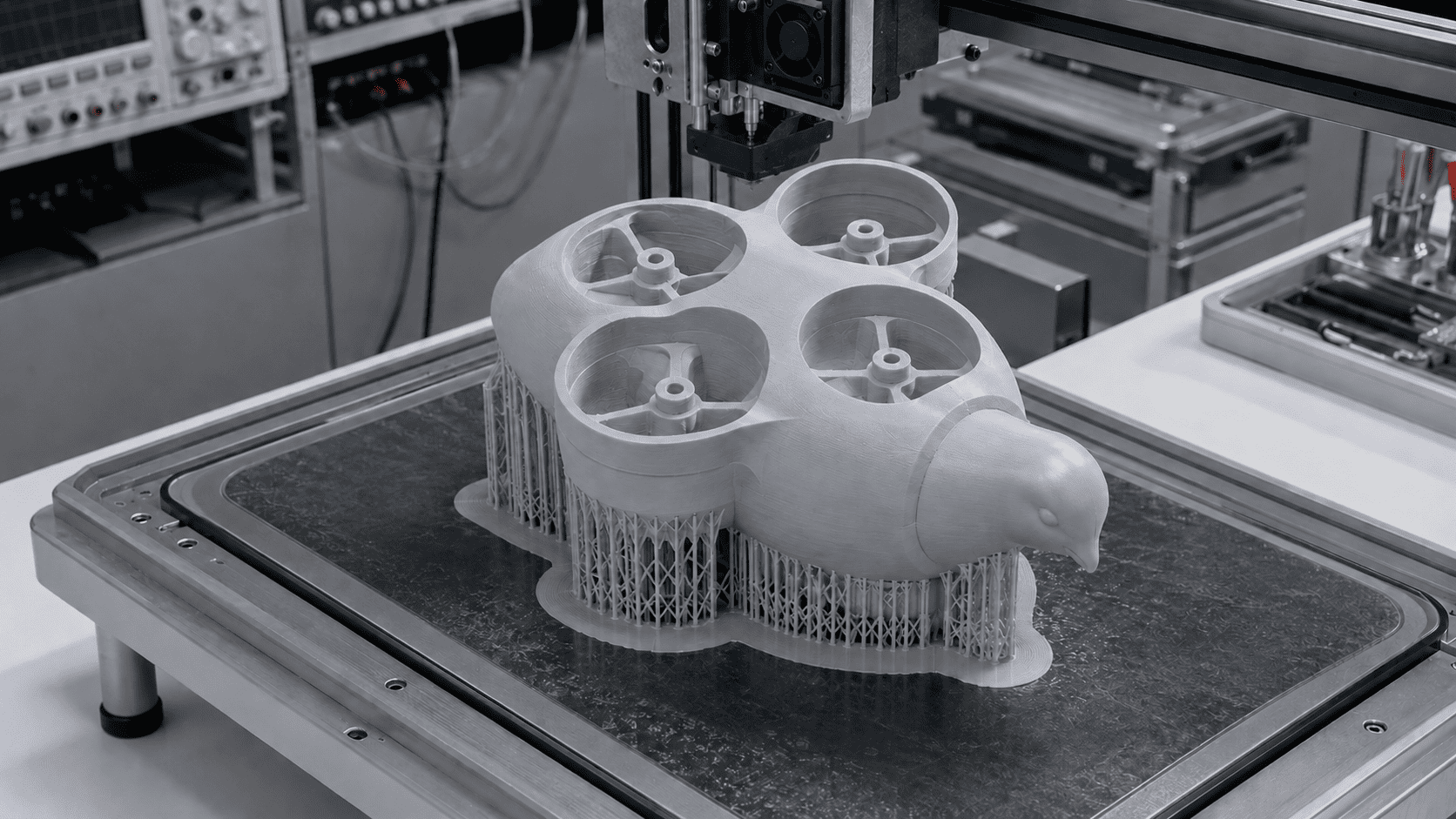
Stage 01Additive form The main fuselage and rotor-duct body emerge on their print supports.
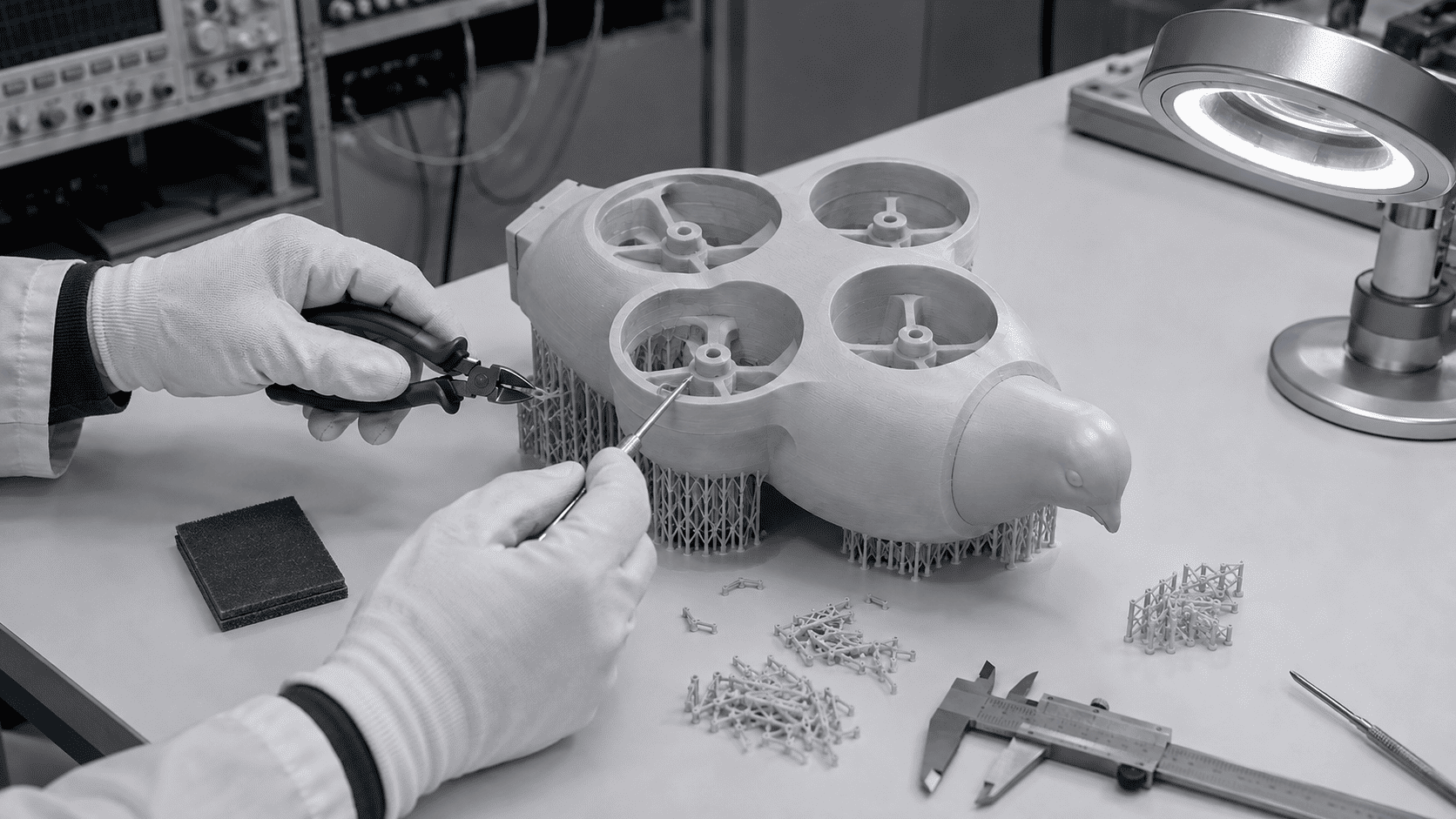
Stage 02Surface preparation Support material is removed and the printed body is prepared by hand.
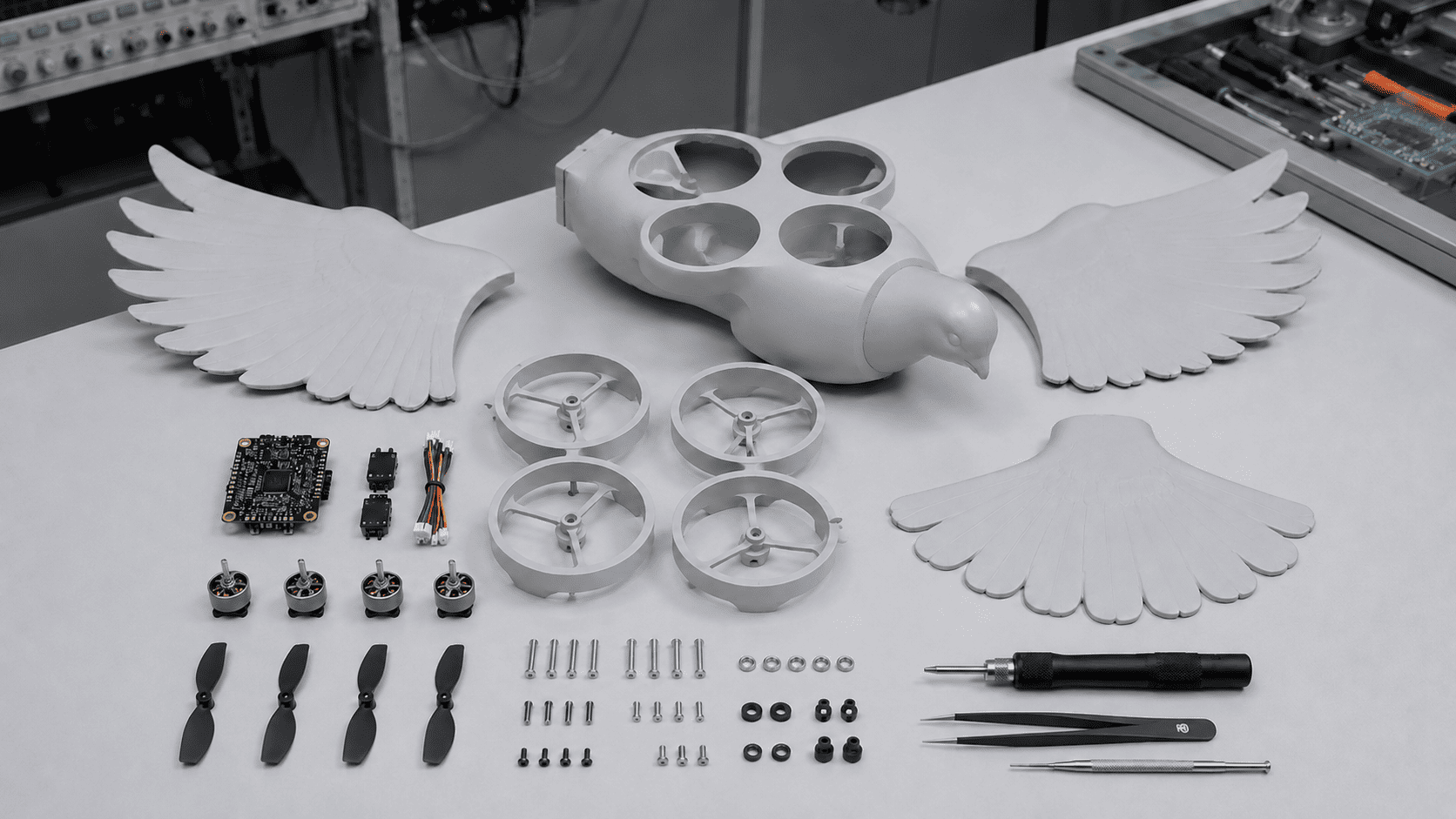
Stage 03Components in context The fuselage, wing elements, motors, electronics and hardware are arranged for integration.
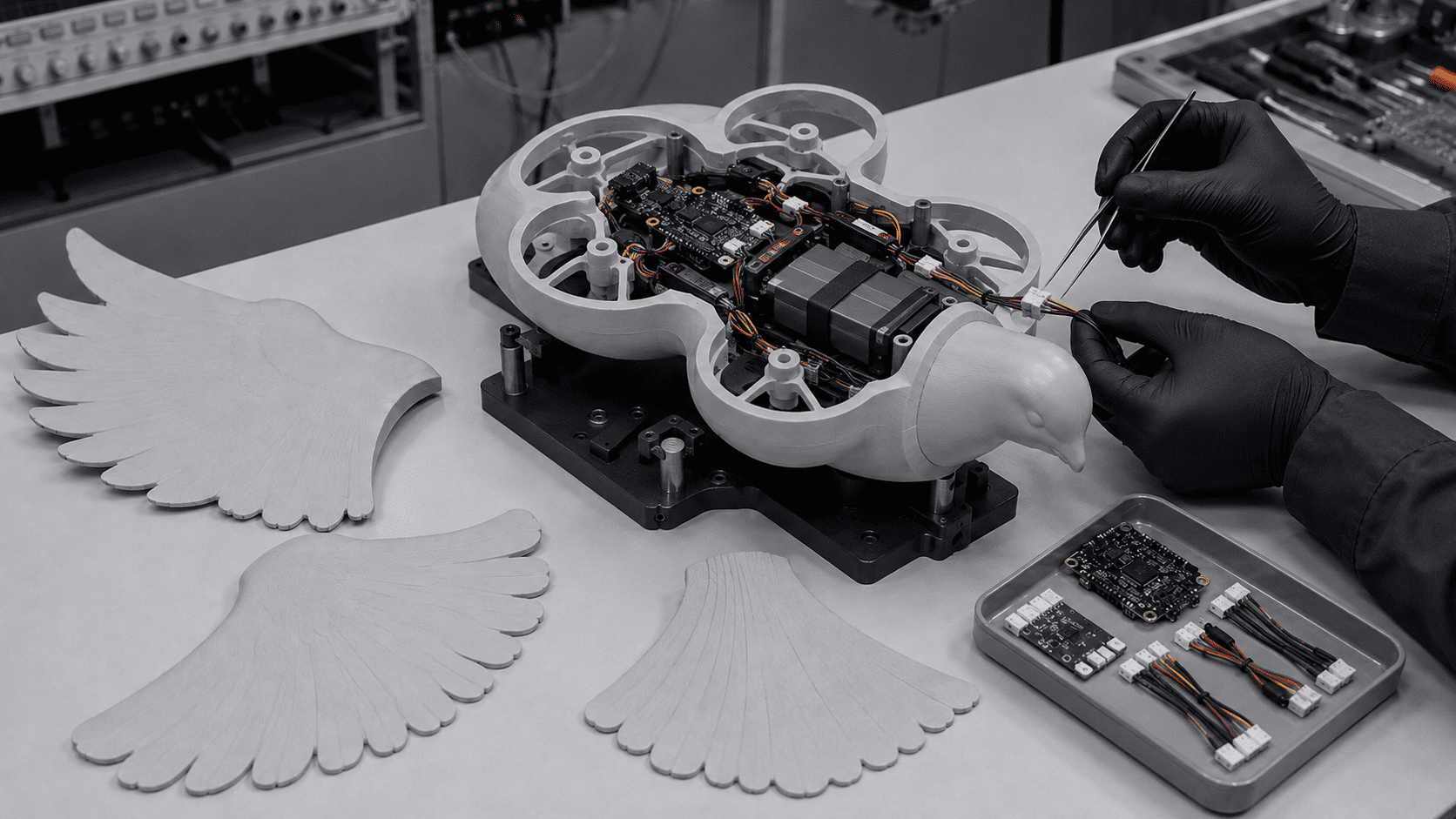
Stage 04Internal integration Power and control components are assembled inside the open fuselage while the wings remain separate.
02 · Agricultural Robot
Ground robotics shaped around the realities of field work.
This concept explores a robust mobile platform for observation, assistance and repetitive field operations. Its real-world role remains subject to application-specific engineering and safety validation.
- Field mobility exploration
- Observation and assistance concepts
- Mechanical and electronic integration
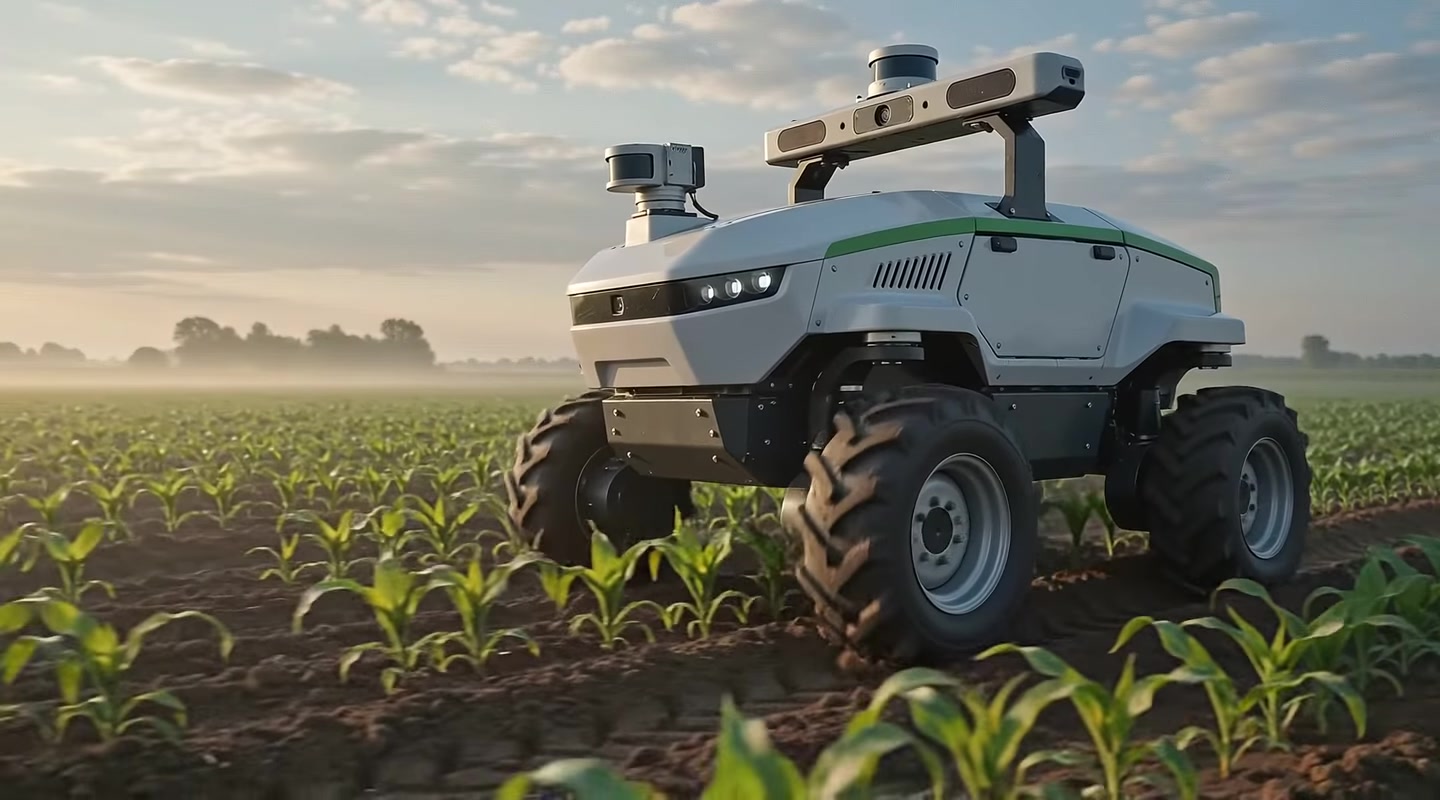
The Agricultural Robot progresses from machining and integration to a field simulation.
Build progression
Structure first. Systems next. Product form through integration.
Each frame preserves the complete engineering context: manufactured parts, component inventory, the rolling chassis and the integrated upper structure.
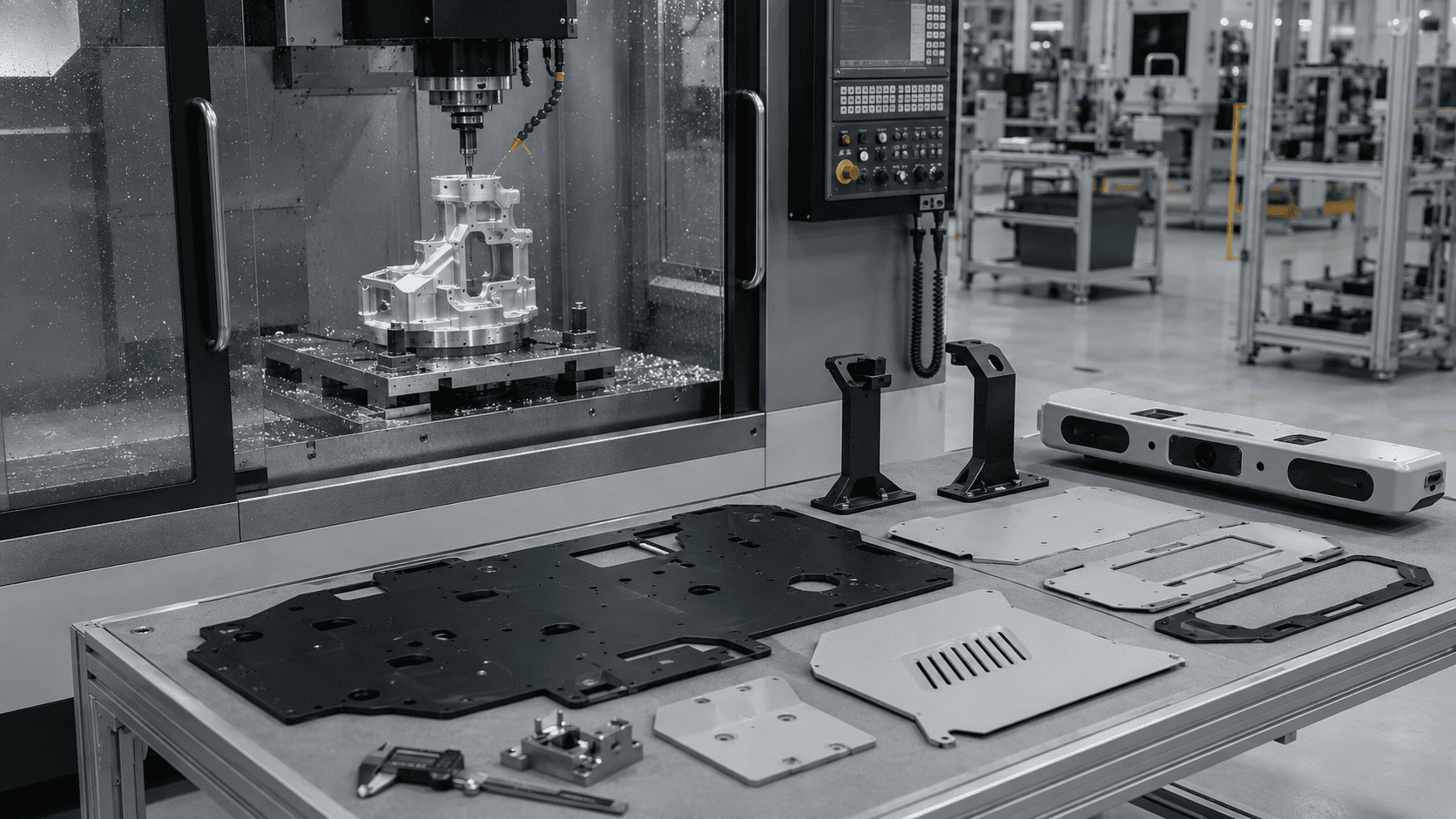
Stage 01Manufactured foundations Machined structural elements establish the physical basis of the platform.
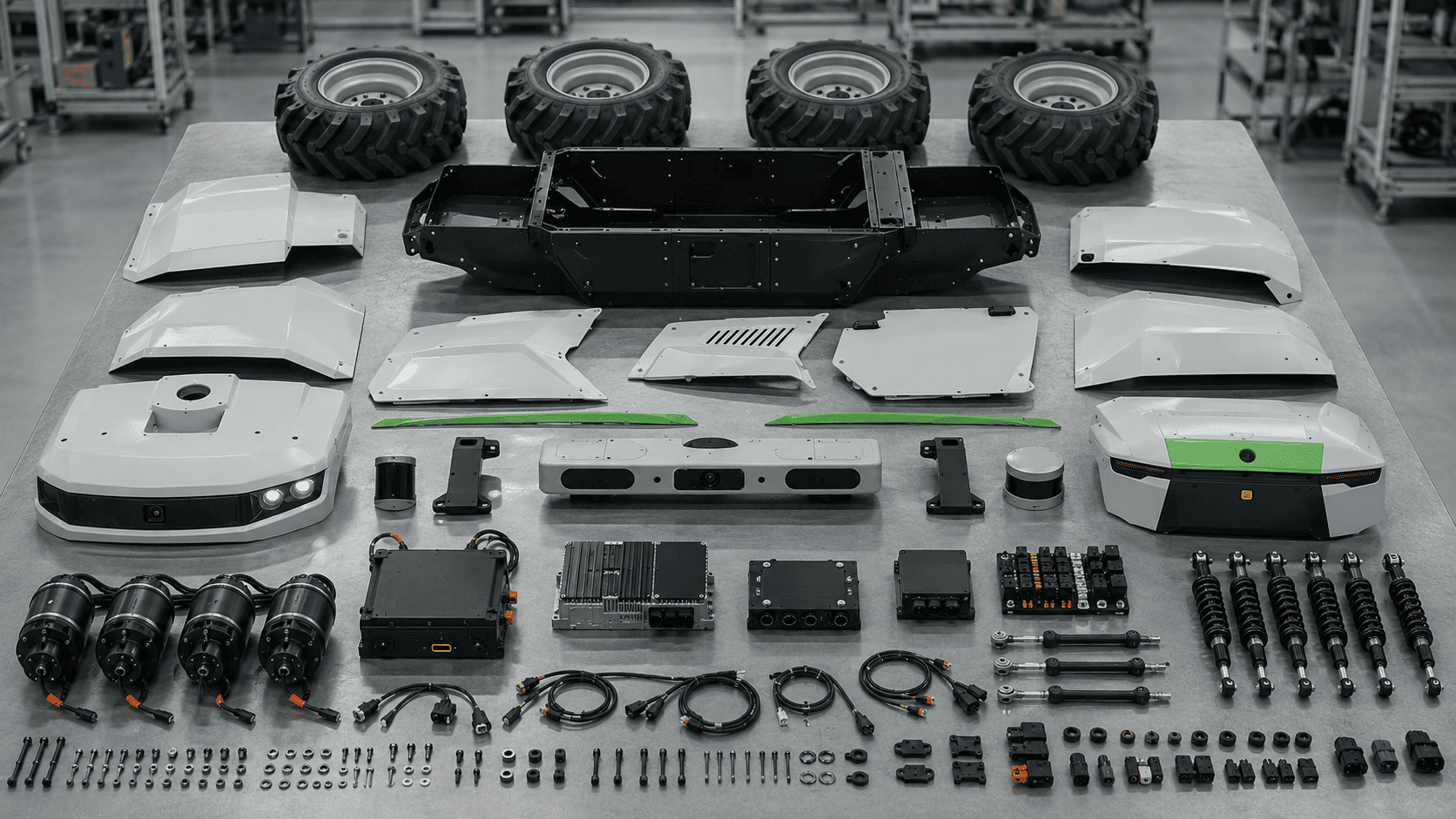
Stage 02System inventory Chassis, wheels, panels, sensors, drives, electronics and hardware are prepared for assembly.
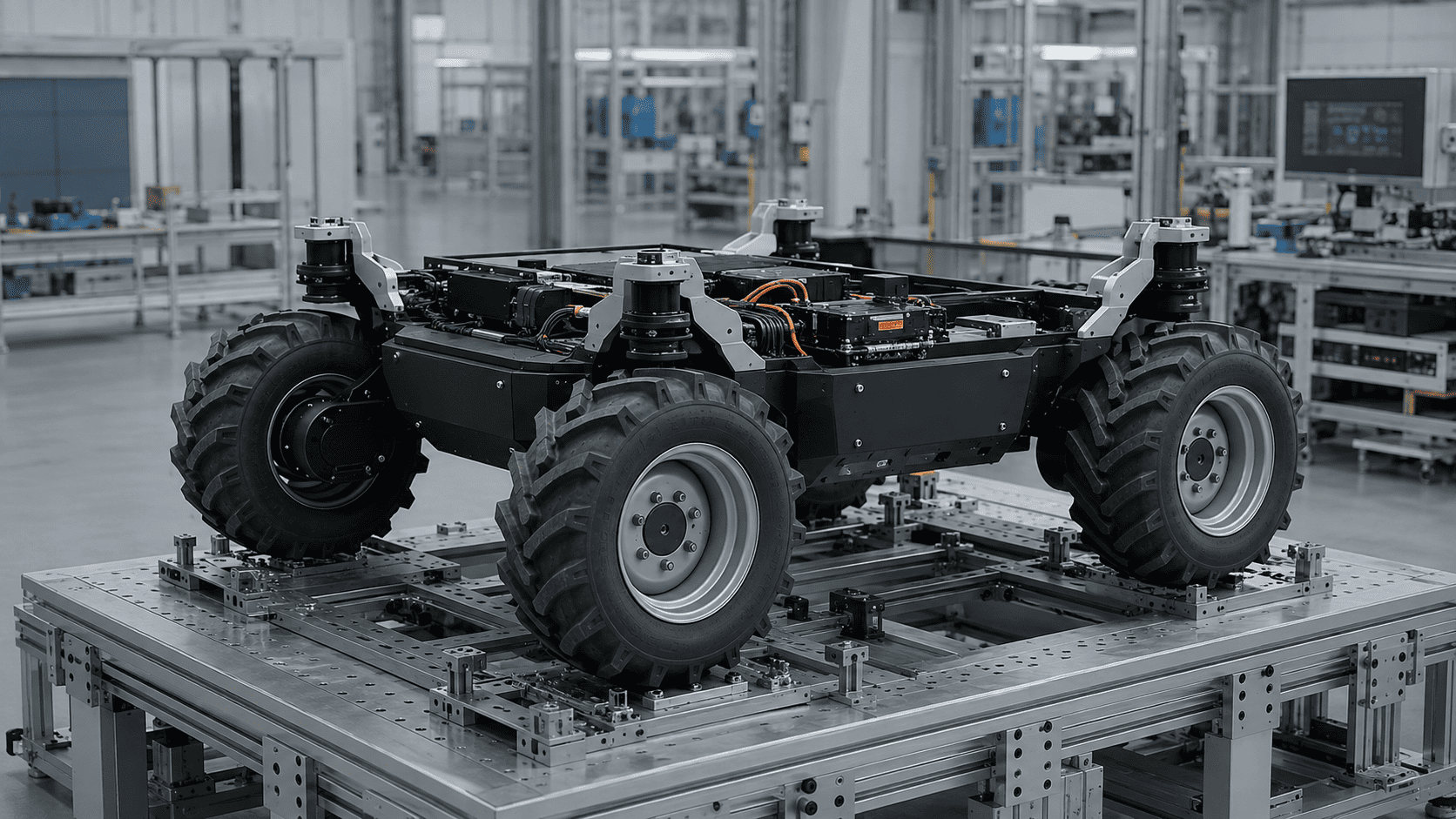
Stage 03Rolling chassis Mobility hardware, drives and electronic systems are integrated before the body panels.
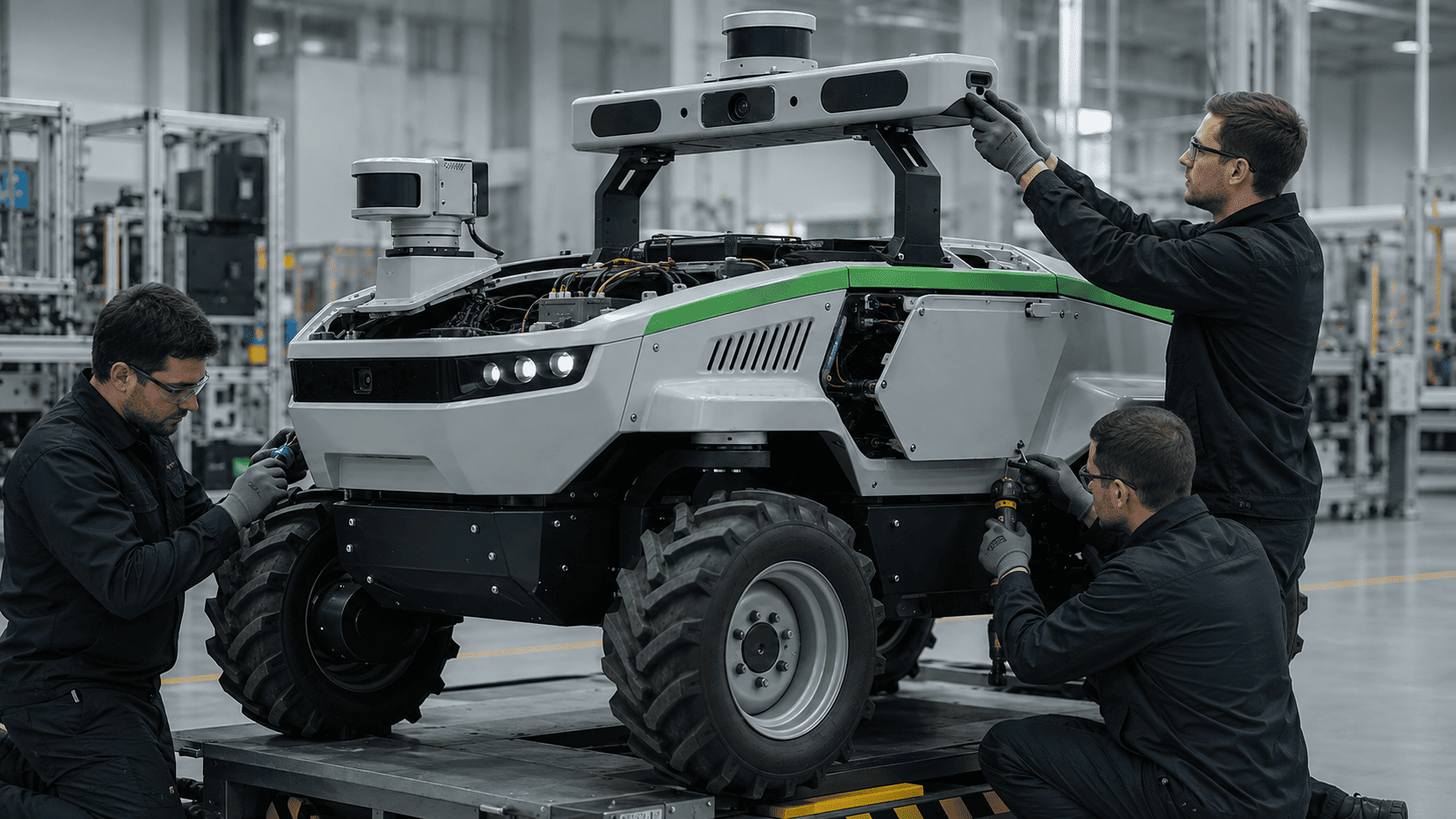
Stage 04Product integration The body and upper sensor structure are fitted while integration work continues around the vehicle.
Engineering approach
Prototype, integrate, validate, iterate.
A clear development rhythm keeps the physical system, its intended environment and its operating boundaries visible together.
- 01
Prototype
Translate an application direction into a physical concept that can be inspected and discussed.
- 02
Integrate
Bring mechanical, electronic and product-form decisions into one coherent system.
- 03
Validate
Test assumptions against the intended environment, operating requirements and safety questions.
- 04
Iterate
Use evidence from each review to refine the next engineering direction.
Responsible development
Clear boundaries are part of the engineering story.
The media communicates development direction. It does not replace technical documentation, a safety case or verified operating evidence.
- Prototypes and concepts remain subject to engineering validation.
- Real-world operation depends on the environment, operating requirements and a dedicated safety assessment.
- Published imagery does not evidence certification, regulatory approval or production deployment.
Robotics enquiry
Discuss a robotics project with CYRKIL.
Share the application, environment and constraints you need to explore. The team can then frame an appropriate engineering conversation.